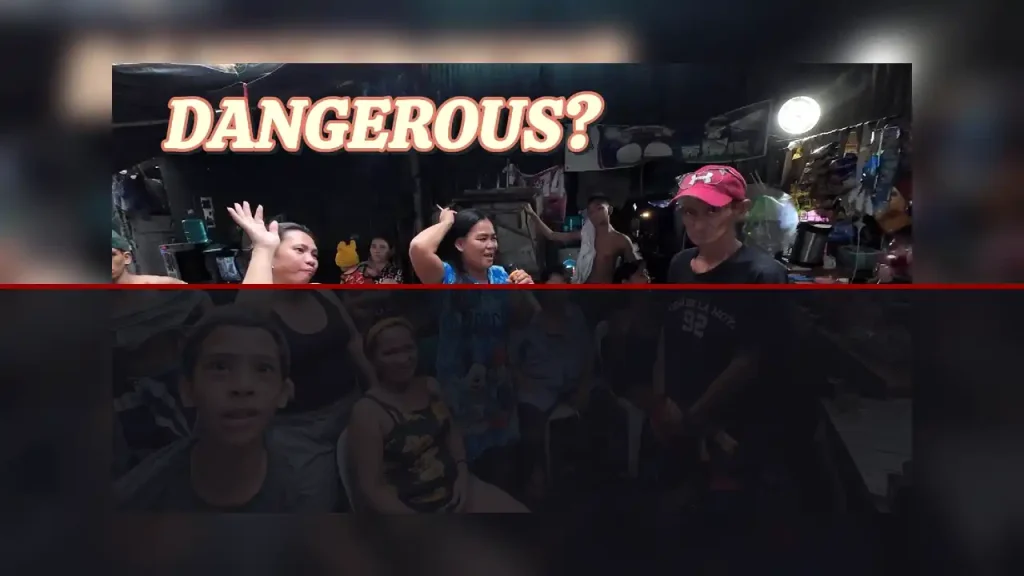
This urban analysis examines footage from the Philippines railway corridor walking tour, detailing how residential life and informal pedestrian pathways interact with transport infrastructure. The video captures micro-commercial activity, shared space dynamics, and organic community movement alongside active rail tracks. It offers critical insights into high-density urban adaptation and non-motorized mobility in metropolitan Philippine neighborhoods.
Spatial Adaptations Along Active Rail Lines
Linear transport corridors in metropolitan areas often serve dual functions when formal city infrastructure fails to keep pace with rapid population growth. In this exploration of a Philippine railway district, the immediate right-of-way transforms into a primary public realm. Rather than acting strictly as a restricted industrial artery for trains, the track zone functions as a shared pedestrian highway, playground, and commercial thoroughfare. The physical layout demands constant spatial negotiation between residents, small-scale vendors, and approaching train traffic.
The ground condition itself presents unique physical demands on pedestrians. Walking along exposed railway ties and coarse aggregate ballast requires deliberate footwork and constant visual assessment. Despite these physical challenges, local residents navigate the terrain with remarkable ease, demonstrating how daily habituation turns complex physical infrastructure into a predictable pedestrian environment. Pathways branch off laterally into narrow alleyways, connecting informal housing clusters directly to the central transit spine.
Pedestrian Permeability and Informal Commerce
Street-level economic activity along the tracks highlights the adaptive nature of neighborhood commerce. Small sari-sari stores, mobile food carts, and temporary service stalls line the immediate edges of the rails. These micro-enterprises rely entirely on foot traffic generated by residents walking between transit hubs and residential pockets. The spatial footprint of these businesses remains highly elastic, capable of shifting back within seconds when train horns signal an incoming locomotive.
This dynamic reveals high spatial efficiency within extremely constrained boundaries. Public space is not defined by municipal zoning or paved sidewalks; instead, it exists dynamically based on real-time train schedules. When the tracks are clear, the space functions as a vibrant market street and social commons. This informal reuse of rail corridors highlights a critical gap in formal urban planning, where municipal authorities rarely provide adequate dedicated pedestrian paths alongside major transit routes.
Infrastructure Neglect and Community Self-Organization
The visual landscape of the corridor brings attention to structural challenges in municipal management. Drainage ditches along the tracks often suffer from solid waste accumulation and stagnant water, pointing to limited public sanitation coverage in informal railway settlements. Yet, despite municipal neglect, community-level self-organization remains visible. Hand-built wooden footbridges span open gutters, improvised stone steps level out steep rail embankments, and shared lighting hangs from overhead utility poles. For more detailed movie reviews, celebrity spotlights, and Pinoy indie cinema breakdowns, visit the Ayosto Film Magazine Hub.
These grassroots infrastructure modifications demonstrate how communities reclaim control over their immediate surroundings. Residents construct functional pathways out of salvaged materials, ensuring safe passage for school children and elderly pedestrians. The neighborhood relies on localized spatial knowledge rather than formal signages or safety barriers. Warning systems are entirely organic, passed down through spoken cues and shared environmental awareness whenever a train approaches.
Evaluating Micro-Mobility and Urban Planning Lessons
Analyzing footage of railway settlements provides essential lessons for modern urban planners and municipal designers. Formal urban development frequently treats active rail lines as hard edges that sever urban connectivity, creating isolated pockets of poverty. However, this footage demonstrates that residents view the rail line as a connecting spine rather than a barrier. Pedestrian traffic naturally flows along the route because it offers the most direct path through densely built environments.
To improve safety and quality of life without displacing established communities, urban policy must move toward integrated design solutions. Installing broad, paved pedestrian boardwalks alongside active lines, paired with protective fencing and dedicated crossing zones, could preserve local mobility while mitigating safety risks. Incorporating proper sanitation, elevated walkways, and structured space for local vendors would formalize the vibrant public life already thriving along these transit tracks.
Frequently Asked Questions
- What makes railway walking tours in the Philippines urbanistically significant?
They reveal how dense communities adapt active industrial infrastructure into multifunctional public spaces, high-density pedestrian corridors, and informal commercial hubs. - How do pedestrians safely navigate active train tracks in these neighborhoods?
Navigation relies on daily habituation, informal community warning systems, and real-time spatial awareness rather than formal signals or physical barriers. - What urban planning lessons can be learned from these rail corridor explorations?
Planners can learn the importance of designing continuous non-motorized mobility paths and integrating community commerce directly along existing transit rights-of-way.
DISCLAIMER: This article is an independent editorial film critique and educational review based on publicly available trailers and materials from CitiWalk4k. All visual media and trademarks belong to their respective copyright holders. The views and analyses expressed herein are solely for critical commentary, media literacy, and cinematic evaluation under Fair Use guidelines, and do not represent formal statements from authorities or the management of ayosto.com.
About The Author